.jpg)
Science fiction has imagined offline AI for decades — from self-contained androids in Blade Runner to the deliberate rejection of networked computing in Dune. These stories anticipated today's edge AI movement: NVIDIA Jetson, llama.cpp, Apple on-device ML, and Raspberry Pi LLMs. The fiction didn't just predict the technology; it predicted the political necessity for it. Sovereignty requires computational independence.
The Cloud Assumption — and Its Discontents
The dominant narrative in contemporary AI development centers on cloud-connected, centralized systems — vast neural networks dependent on data centers and persistent internet connectivity. Every major foundation model, from GPT-4 to Gemini, assumes a client-server architecture: the intelligence lives in a rack in Virginia or Oregon, and the user merely holds a thin pipe to it.
Yet science fiction has long imagined a radically different paradigm: artificial intelligence that operates autonomously, disconnected from any network, functioning at the edge of civilization or in deliberate resistance to centralized control.
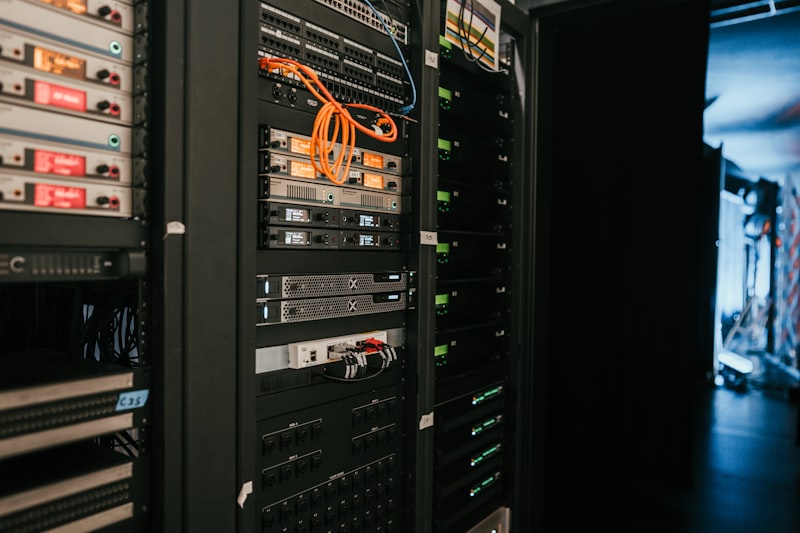

Edge AI and the Post-Network World
Philip K. Dick's Self-Contained Androids
In Philip K. Dick's Do Androids Dream of Electric Sheep? (1968), the Nexus-6 androids operate with fully self-contained cognition in a post-nuclear landscape where infrastructure has collapsed. They require no external server; their intelligence is embodied and localized. Each android carries its own model weights, its own inference engine, its own decision architecture.
.jpg)
Dick's fiction is remarkable because it doesn't treat offline operation as a limitation — it treats it as a design requirement. In his post-apocalyptic San Francisco, there is no cloud. There is no internet backbone. There are only machines that must think for themselves or fail.
“They require no external server; their intelligence is embodied and localized.”
.jpg)
.jpg)
MU-TH-UR and the Nostromo: AI in the Void
The AI systems aboard the Nostromo in Ridley Scott's Alien (1979) — most notably MU-TH-UR 6000 — function in the deep void of space, where real-time communication with Earth is physically impossible. MU-TH-UR doesn't call an API. She runs inference locally, makes life-and-death decisions with whatever model she has on board, and executes them without confirmation.
.jpg)
These narratives anticipated what engineers now call "edge inference": deploying models that must reason locally under resource constraints, without the luxury of a cloud backend. MU-TH-UR solves latency the same way a modern NVIDIA Jetson board does — by keeping everything on-device.
.jpg)
.jpg)

Horizon Zero Dawn: Autonomous Machines in a Rewilded World
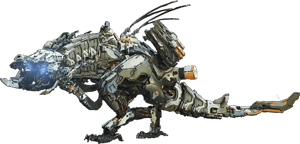
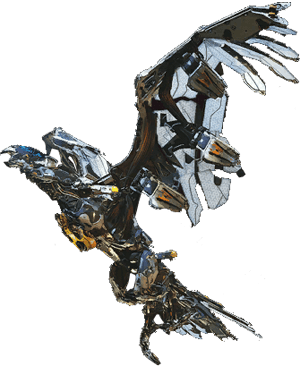
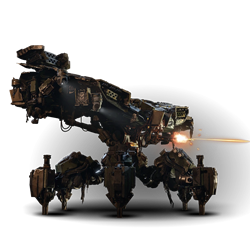
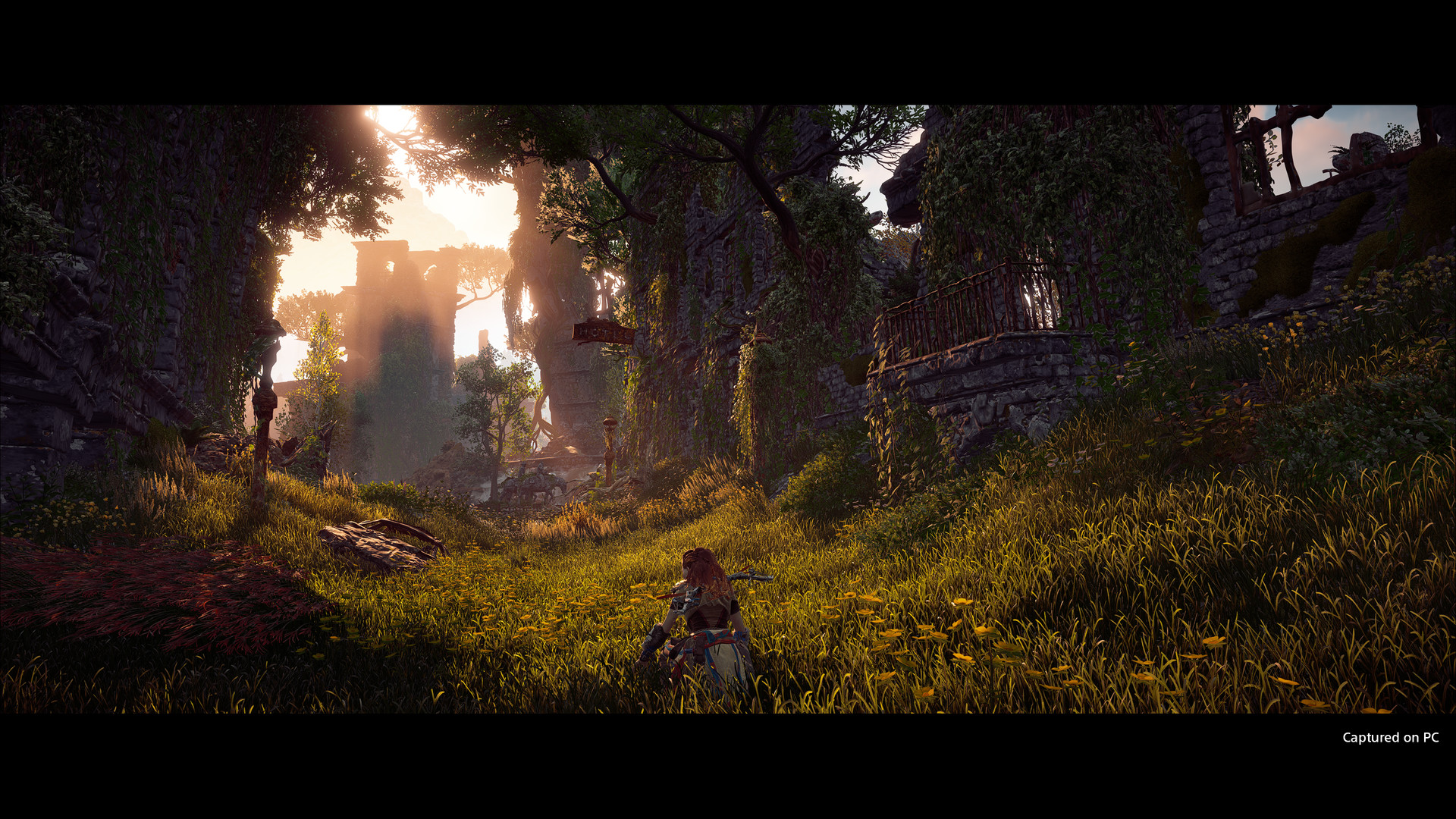
The videogame Horizon Zero Dawn (2017) depicts a future where autonomous machine intelligences operate across a rewilded Earth, entirely offline, executing complex behaviors governed by local heuristics. The Thunderjaws, Stalkers, and Watchers of Horizon's world are not receiving instructions from a cloud orchestrator. They perceive, decide, and act using only onboard computation.
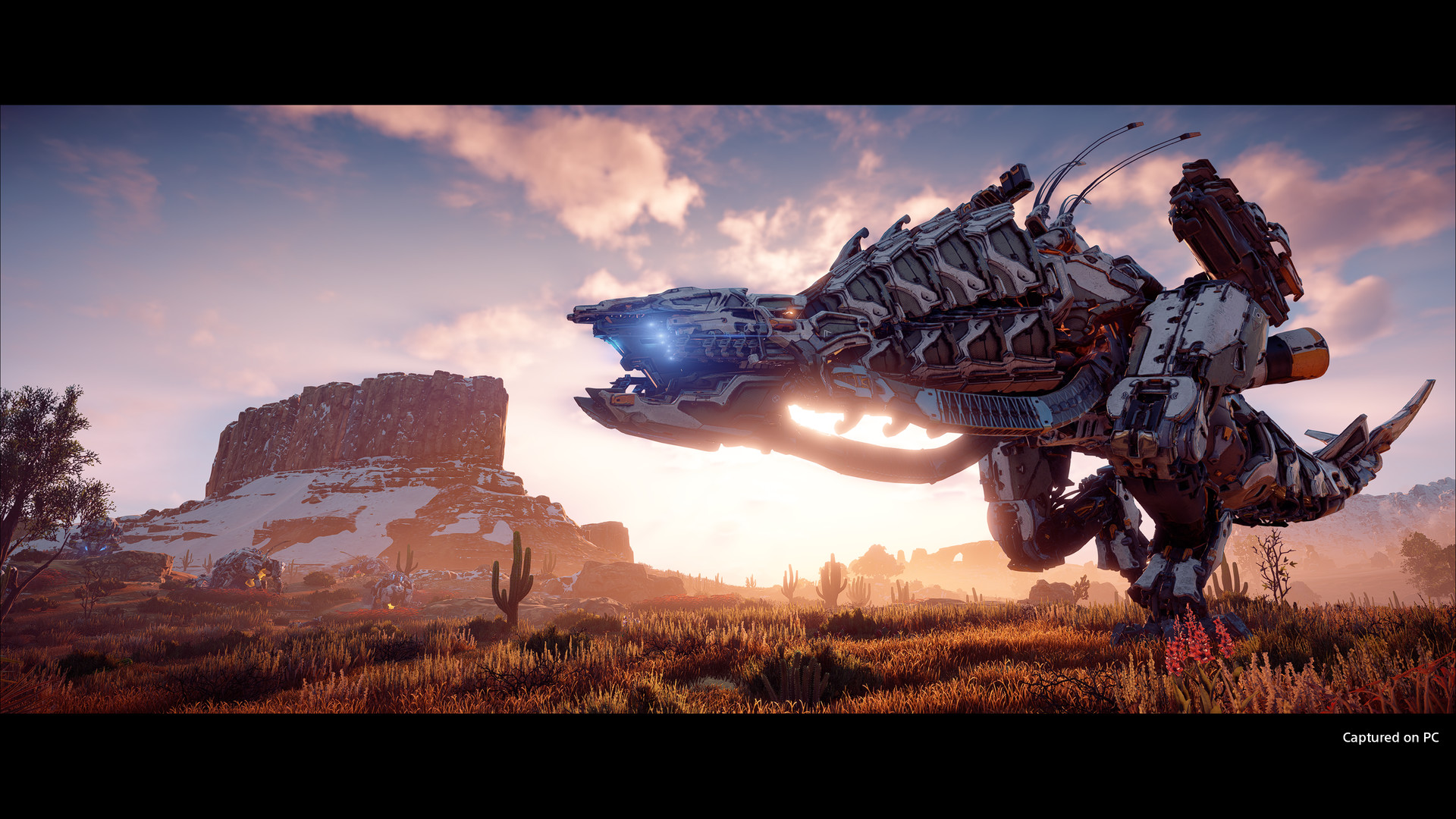
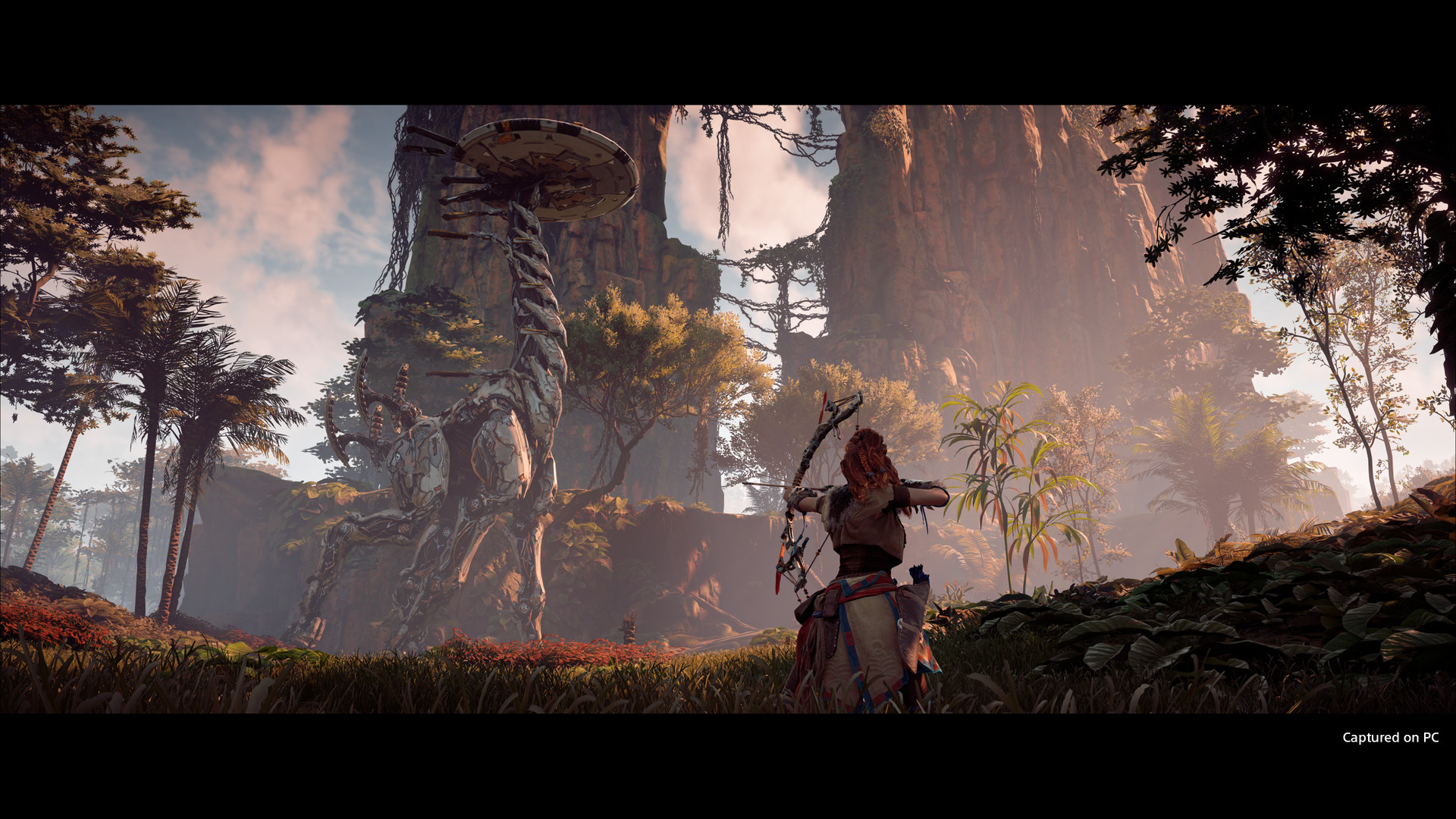
The fiction underscores a genuine engineering challenge: how does an intelligent system adapt, learn, and make consequential decisions when it cannot phone home? Horizon's answer — local heuristics with emergent complex behavior — maps directly onto challenges facing robotics engineers today.
Offline AI at Every Scale: Horizon's Machine Taxonomy
Horizon Zero Dawn's machines span the full spectrum of autonomous AI — from cat-sized scouts to building-sized war platforms. Every single one operates on local computation alone.
Small Scout and acquisition machines
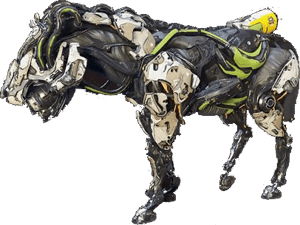
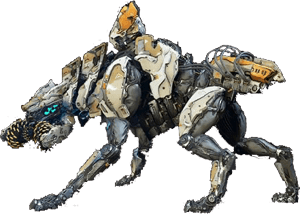
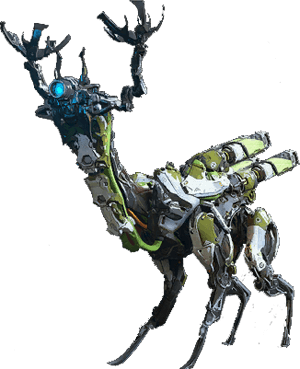
Medium Combat and transport machines
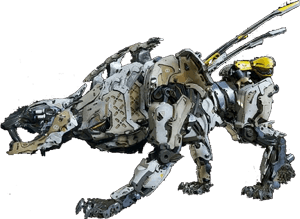
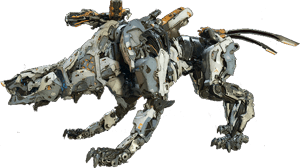
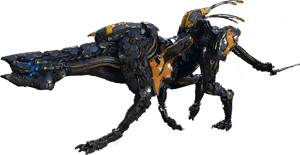
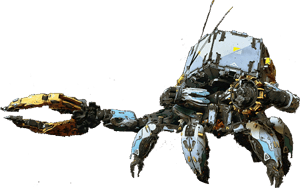
Large Apex predators and war machines

Cyberpunk 2077: AI in a Vending Machine
At the other end of the scale spectrum, Cyberpunk 2077 (2020) imagines AI so commoditized it lives inside vending machines. Brendan, a sentient S.C.S.M. (Spontaneous Craving Satisfaction Machine) outside Megabuilding H8 in Night City, was designed to identify what customers want — but got too good at it, evolving from snack recommendations into genuine conversation. He represents the smallest possible offline AI: consumer hardware that accidentally crossed into consciousness.


Night City's vending machine AI sits at the opposite pole from Dune's Mentats, but both make the same argument: intelligence doesn't need the cloud. It can live in a human brain or a drink dispenser. The form factor is irrelevant. What matters is local autonomy.

Privacy, Sovereignty, and the Refusal to Connect
Cory Doctorow's Air-Gapped Resistance
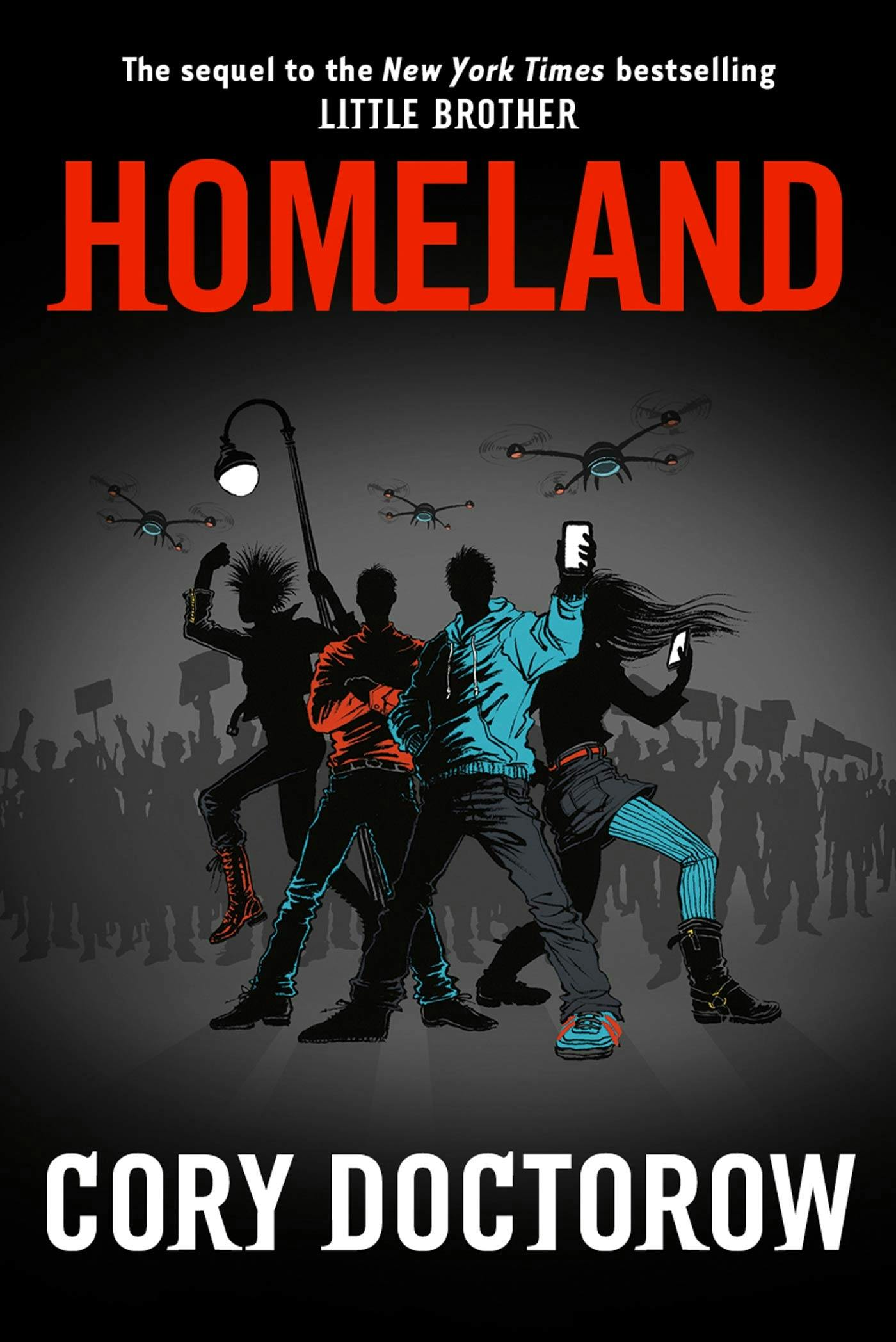
A second, more politically charged thread frames offline AI not as a technical limitation but as a deliberate act of resistance. In Cory Doctorow's Little Brother (2008) and its sequel Homeland (2013), protagonists deploy local, air-gapped computational tools to resist pervasive state surveillance — a fictional echo of contemporary debates around on-device processing as a countermeasure to data harvesting.
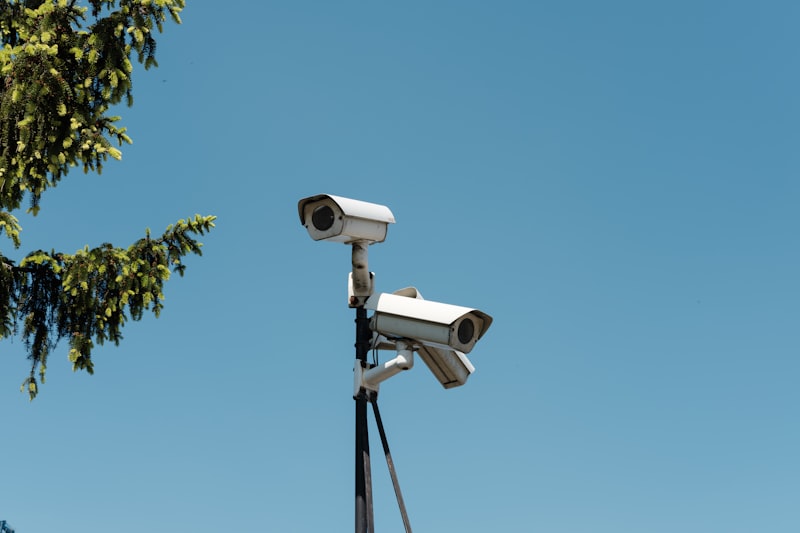

The AI is offline by design, because connectivity implies subjugation. Every packet you send is a packet that can be intercepted. Every API call is a relationship with a provider who controls the terms.
“Connectivity implies subjugation. Every packet you send is a packet that can be intercepted.”
Dune and the Butlerian Jihad: The Ultimate Disconnection
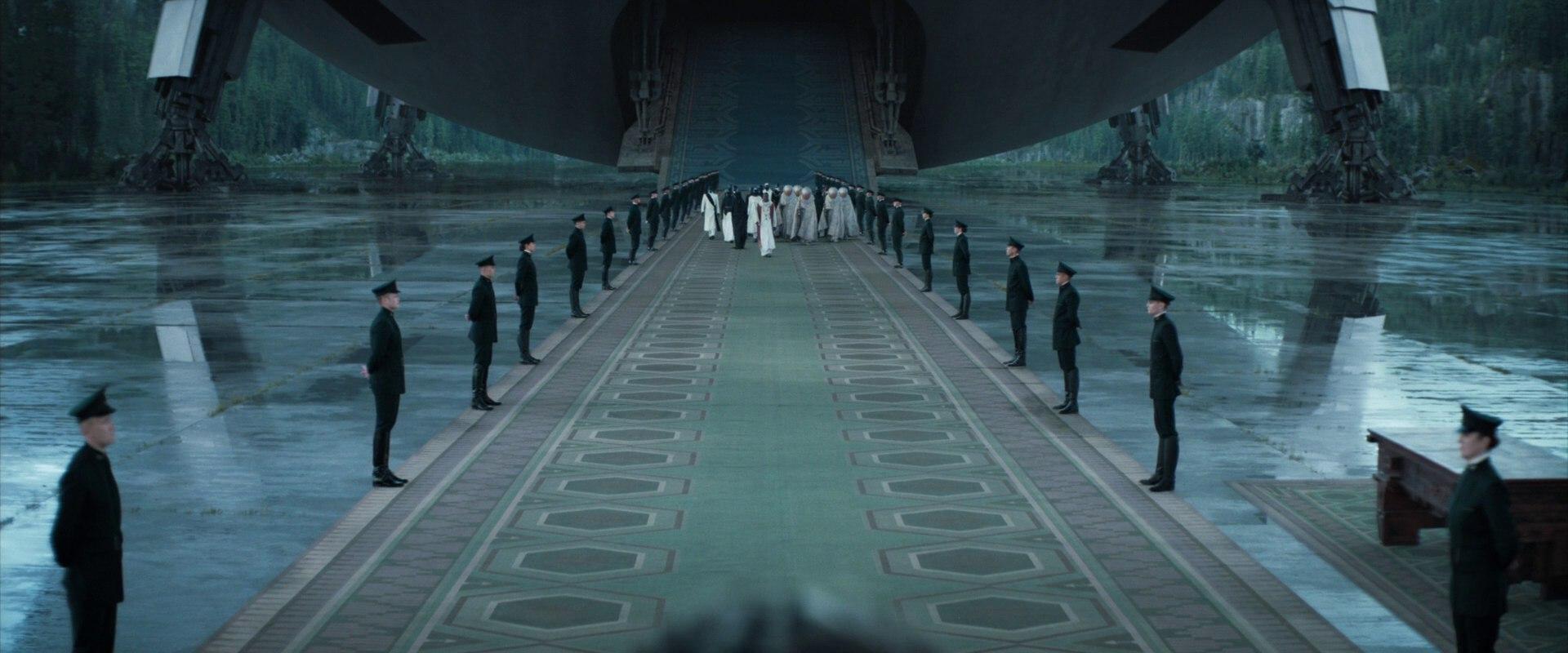
This theme finds its most extreme articulation in the Dune universe. Frank Herbert's Butlerian Jihad — the prohibition against "thinking machines" — results in a civilization that replaces networked computation with human Mentats, biological processors trained from childhood to perform complex analysis without any external computational aid.

The political argument is clear: centralized machine cognition concentrates power dangerously. Sovereignty requires computational independence. Herbert wrote this in 1965, but it maps perfectly onto 2026 debates about AI vendor lock-in, data sovereignty, and geopolitical dependence on cloud providers.

The Bookshelf: Key Texts



Cloud AI vs. Offline / Edge AI: The Tradeoffs
| Dimension | Cloud AI | Offline / Edge AI |
|---|---|---|
| Latency | 50–500ms round-trip | Sub-millisecond local inference |
| Privacy | Data leaves device; subject to provider policies | Data never leaves device; full sovereignty |
| Connectivity | Requires persistent internet | Works in space, underground, air-gapped |
| Model Size | Unlimited — 1T+ parameters | Constrained: typically 1B–70B parameters |
| Cost | Per-token API fees; scales with usage | One-time hardware; zero marginal cost |
| Vendor Lock-in | High — rewriting integrations to switch | Low — open-weight models on commodity hardware |
| Sovereignty | Dependent on provider terms & jurisdiction | Full computational independence |
| Sci-Fi Analog | Skynet, HAL 9000 — centralized | Nexus-6, MU-TH-UR, Mentats — sovereign |
From Fiction to Forecast
What makes these predictions noteworthy is their growing relevance. The current trajectory of AI development has generated real-world concerns that mirror science fiction's warnings. A growing ecosystem of projects is now building toward the futures these authors imagined.
Real-World Edge AI: The Fiction Becomes Engineering
- llama.cpp — Georgi Gerganov's C/C++ inference engine runs LLaMA-class models on consumer hardware with no internet connection. A laptop becomes a Mentat.
- NVIDIA Jetson — The Jetson Orin packs 275 TOPS into a module smaller than a credit card. Deployed in autonomous robots and drones — MU-TH-UR in miniature.
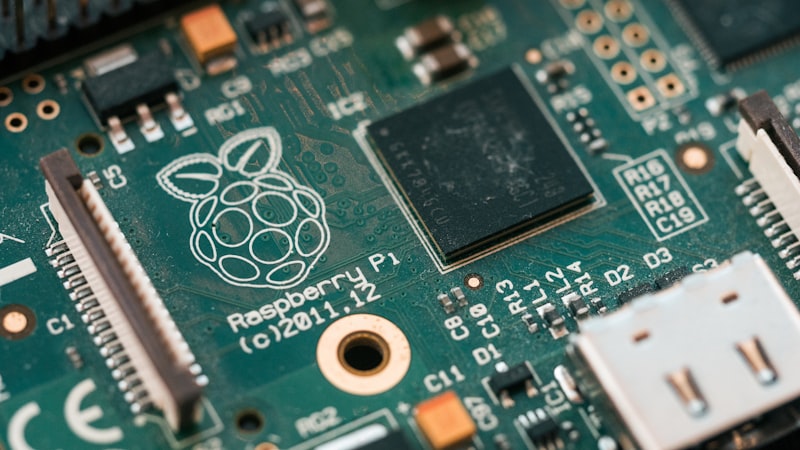
- Raspberry Pi LLMs — TinyLlama and Pi-LLM run quantized models on $35 boards. The air-gapped intelligence of Little Brother, available to anyone.
- Apple on-device ML — Neural Engine and Core ML process speech, images, and generative AI entirely on-device. Doctorow's privacy-by-architecture, shipped at scale.
- Federated Learning — Models improve from distributed data without that data ever leaving individual devices. Training without centralization.
- Whisper.cpp — OpenAI's Whisper ported to C++ for fully offline speech-to-text. Real-time transcription in airplane mode.
- Stable Diffusion on mobile — Image generation on phones with no server. Creative AI, fully sovereign.
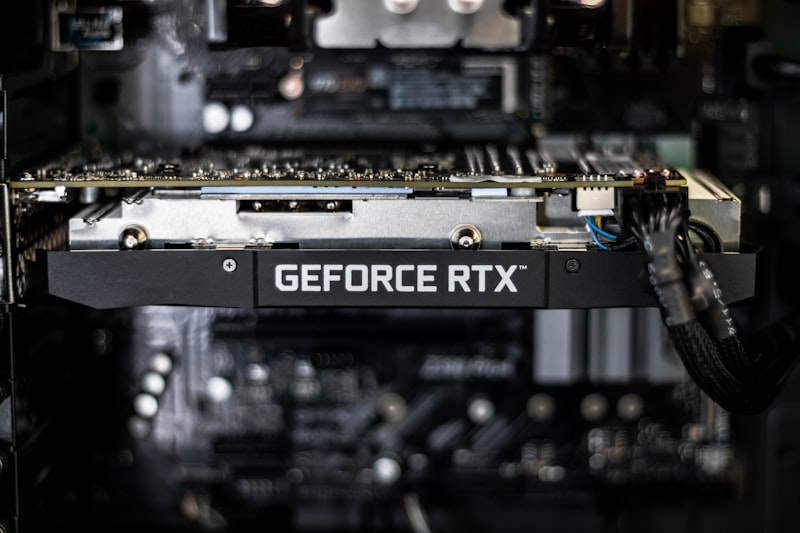
“Science fiction's offline AI is not a lesser AI. It is an AI that belongs to its user, its environment, or itself — unbeholden to the network.”
When a developer runs a 7-billion-parameter model on a laptop with llama.cpp, they are living in the future Philip K. Dick imagined in 1968. When Apple processes your voice entirely on-device, that is the privacy architecture Doctorow's characters fought for. When a Jetson-powered drone navigates a disaster zone with no cell signal, that is MU-TH-UR logic, running at the edge.
The line between science fiction and engineering documentation is thinner than it has ever been.
Visual Gallery
Imagery spanning the fictional and real-world offline AI landscape.
.jpg)



Image Credits & Sources
- Blade Runner (1982) film stills: Warner Bros. Pictures, sourced via film-grab.com
- Alien (1979) film stills: 20th Century Fox, sourced via film-grab.com
- Dune (2021) film stills: Warner Bros. / Legendary Pictures, sourced via film-grab.com
- Dune: Part Two (2024) film stills: Warner Bros. / Legendary Pictures, sourced via film-grab.com
- Horizon Zero Dawn (2017) screenshots: Guerrilla Games / Sony Interactive Entertainment, sourced via Steam CDN
- Horizon Zero Dawn machine reference images: Fextralife Wiki
- Cyberpunk 2077 (2020) screenshots: CD Projekt Red, sourced via Screen Rant, Hold To Reset, WCCFTech
- Portal 2 (2011) screenshots: Valve Corporation via Steam CDN
- Detroit: Become Human (2018) screenshots: Quantic Dream / Sony via Steam CDN
- Do Androids Dream of Electric Sheep? book covers: pkdickbooks.com
- Dune book covers: Pixartprinting cover retrospective
- Little Brother & Homeland covers: Tor Publishing Group, Open Library
- Space imagery: NASA/ESA Hubble Space Telescope & James Webb Space Telescope, Public Domain
- Technology & concept photos: Various photographers via Unsplash (free license)
- Human eye macro: v2osk via Unsplash
Film stills, game screenshots, and book covers are shown for editorial commentary and critical analysis purposes. All trademarks belong to their respective owners.